
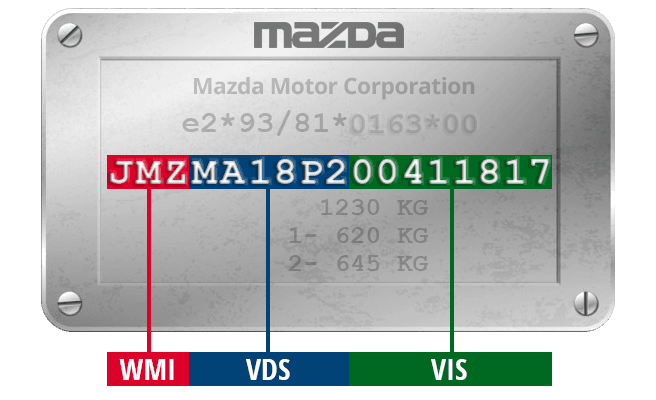
How is the VIN Constructed?
The VIN is made up of three distinct parts, each serving a specific purpose:
WMI (World Manufacturer Identifier)
This is a three-character code that identifies the vehicle’s manufacturer. It can consist of letters and numbers, offering a global identifier for the automaker.VDS (Vehicle Descriptor Section)
Comprising six characters, the VDS provides detailed information about the vehicle’s model, body type, engine type, and other specifications, all encoded in a sequence chosen by the manufacturer.VIS (Vehicle Identifier Section)
The final eight characters of the VIN, the VIS is unique to each vehicle. The last four characters are typically numeric and often include the year of manufacture and the plant where the vehicle was produced.
VINs consist of alphanumeric characters, with the last four almost always being numbers. The VIN can include any combination of the following capital letters and numbers: 1 2 3 4 5 6 7 8 9 0 A B C D E F G H J K L M N P R S T U V W X Y Z.
Manufacturers may sometimes separate elements of the VIN with spaces or punctuation marks for readability, but on official documents and the vehicle itself, the VIN must appear as a single continuous string without any spaces or interruptions.
Where can I find VIN number?
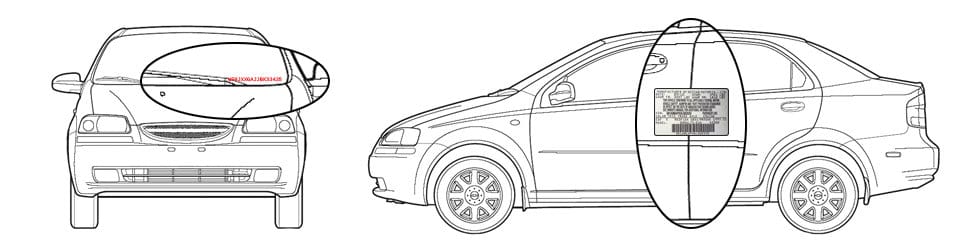
On most passenger vehicles, the VIN can be found in several locations, but it is most commonly visible on the driver’s side dashboard. The easiest way to locate it is by standing outside the car and looking through the windshield. Additionally, you may find the VIN in the following places:
- Driver’s side door jamb – Often appears as a sticker when the door is open.
- Driver’s side door – May also feature a label or plate with the VIN.
- Engine compartment – Look for a nameplate attached to the engine block.
- Trunk – Some vehicles have a VIN nameplate in the trunk area.
If you’re having trouble finding the VIN, your vehicle’s dealership or manufacturer can provide assistance in locating it for your specific make and model. The VIN is also listed on important documents such as the vehicle’s insurance card, registration papers, and title records.
Why is the VIN Important?
The VIN is more than just a string of letters and numbers; it holds critical information about the vehicle’s history. From where it was manufactured to its accident history, recalls, and previous ownership, the VIN tells the full story of the vehicle. That’s why it’s essential to check the VIN before purchasing a car. If a seller is reluctant to share the VIN, it could be a red flag indicating potential issues with the vehicle, especially if the price seems unusually low.
By using a VIN check or VIN decoder, you can uncover this vital information and make an informed decision about your vehicle purchase. Don’t wait – locate the VIN on your car and check it through our website today.


